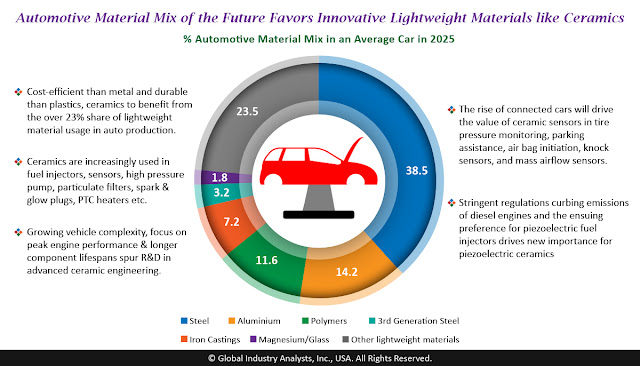
The global market for Automotive Ceramics is projected to reach US$1.8 billion by 2025, driven by the rise of new materials gaining ground in automobile manufacturing. A large variety and types of materials are used to manufacture a car such as iron, aluminum, steel, glass, rubber, petroleum products, copper, and steel. These materials over the years have evolved to become more reliable, durable and safer. Automotive materials are today in the technology spotlight as OEMs face intense pressure to build cars that are sophisticated, smart, powerful, lightweight, energy/fuel efficient, and viable for end of life recycling. Several of the demands placed on vehicle characteristics are paradoxical in nature. For instance, lightweighting should be achieved without loss of strength and speed properties; and engine downsizing for fuel economy should be implemented without compromising on vehicle torque and performance; among others. The scenario brings innovative materials to the forefro...